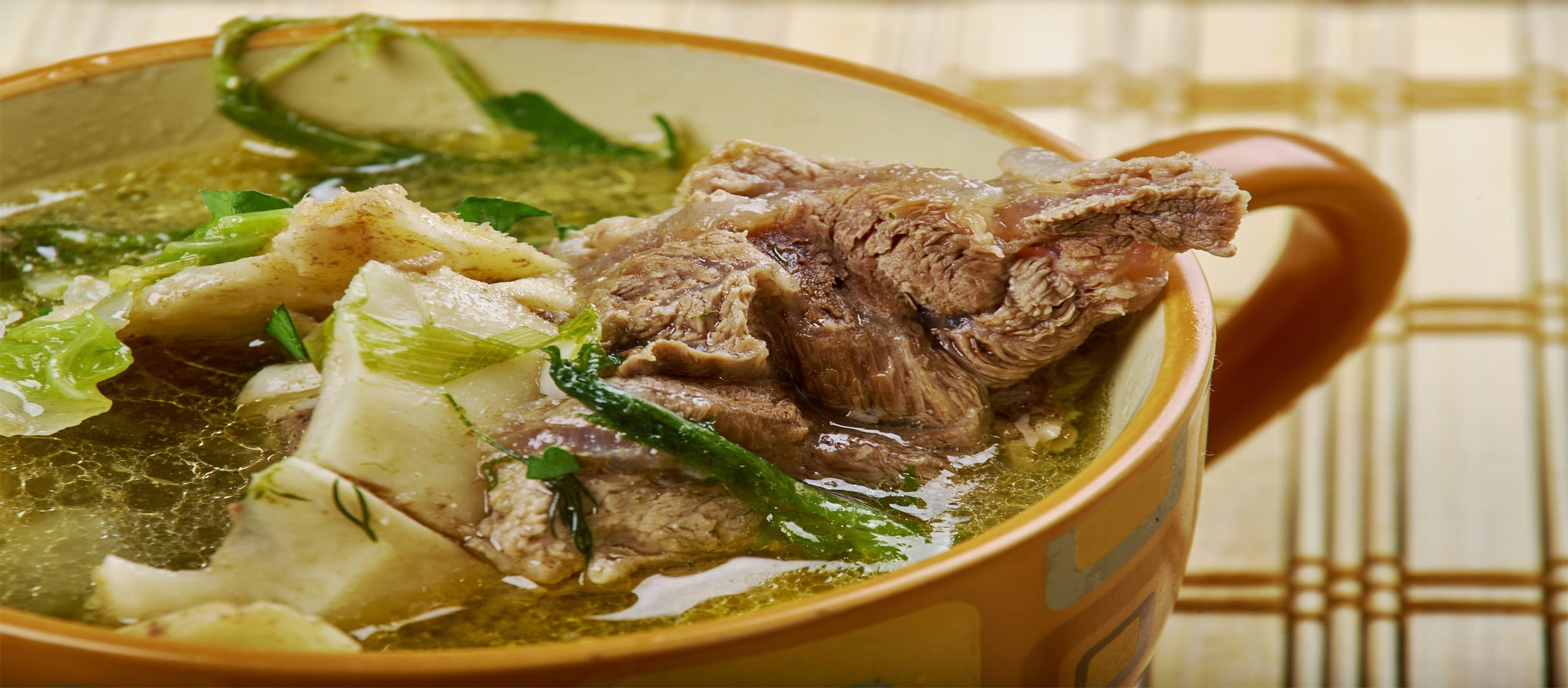
Khash, also known as pacha, is an ancient dish traditionally associated with Armenia and Azerbaijan, as well as parts of Georgia, eastern Turkey, and Iran. It is a cold-season dish, deeply rooted in rural and pastoral traditions where no part of an animal was wasted.
Historically, khash developed as a way to make use of tougher, less desirable cuts such as hooves, stomach, and tongues. These parts required long cooking times to become tender and were therefore simmered overnight or for many hours, producing a gelatin-rich, nourishing stew. The dish was especially valued in winter months for its warmth, high fat content, and restorative qualities.
Khash is traditionally eaten early in the morning, often during communal gatherings. It is served very simply, accompanied by lavash bread, garlic, vinegar, and lemon juice, allowing diners to season it to taste. Alcohol, particularly vodka, is sometimes consumed alongside it in social settings, reflecting its role as a communal and ceremonial meal.
Despite its humble origins, khash holds strong cultural significance. In Armenia and Azerbaijan, it is more than food, it is a ritual tied to hospitality, endurance, and shared tradition. Today, khash remains a symbol of heritage cooking, preserving ancient techniques and values centered on respect for ingredients and communal dining.