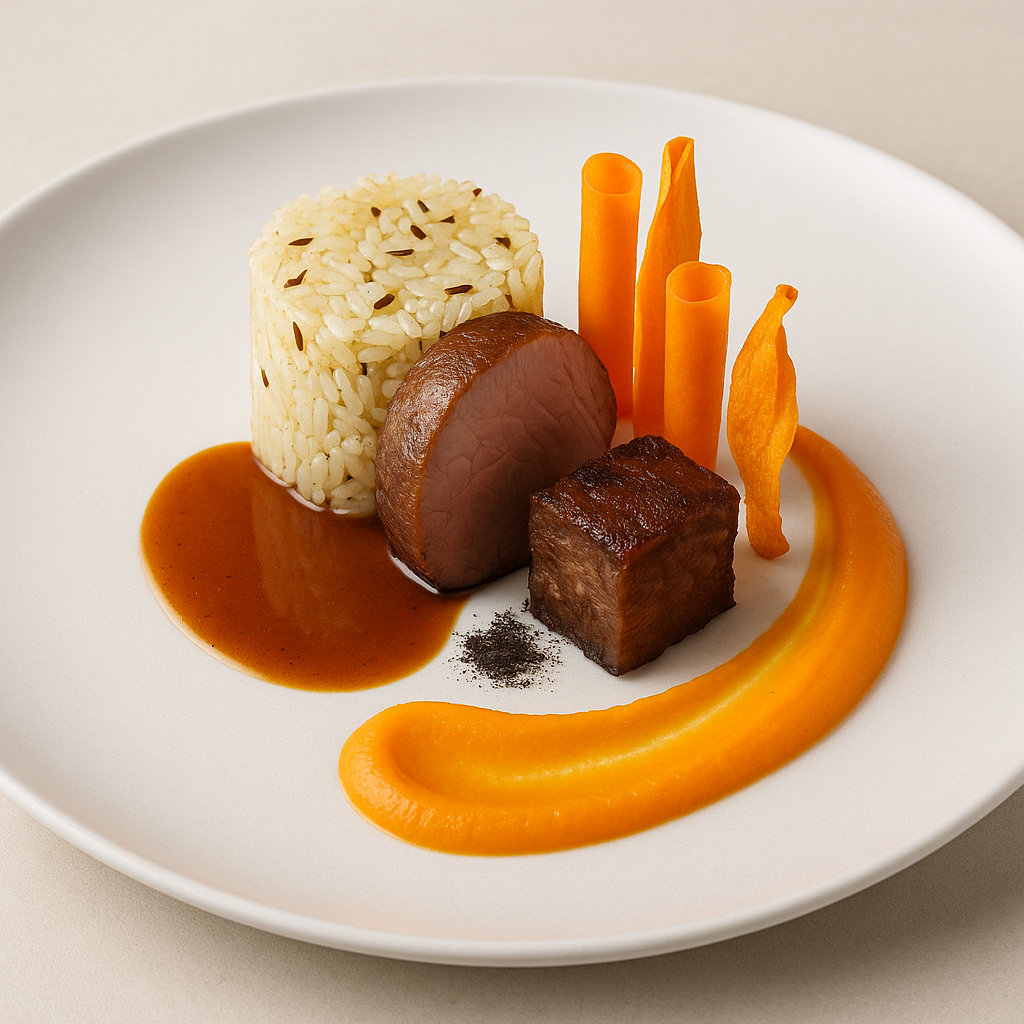
Ugali is one of the most important staple foods in Tanzania and across much of East and Central Africa. It is made by cooking flour, most commonly maize (cornmeal), in water until it forms a thick, smooth dough. Depending on the region, ugali may also be prepared using cassava flour, millet, sorghum, banana flour, or semolina.
The dish developed as a practical and filling accompaniment to stews and vegetables. Because maize became widely cultivated in East Africa, ugali evolved into a daily food that provides energy and structure to meals rather than strong flavor. It is traditionally eaten by hand, with small portions pinched off and used to scoop up stews or sauces.
In Tanzania, ugali is most commonly served with bean stews, meat sauces, or leafy greens. It holds cultural importance beyond daily meals and is often prepared during national celebrations, including December 9th, Tanzania’s Independence Day, where it symbolizes unity, simplicity, and shared heritage.
Ugali represents the foundation of Tanzanian cuisine. Its neutral taste allows it to pair with a wide range of dishes, reinforcing its role as an essential, unifying food across households, regions, and generations.