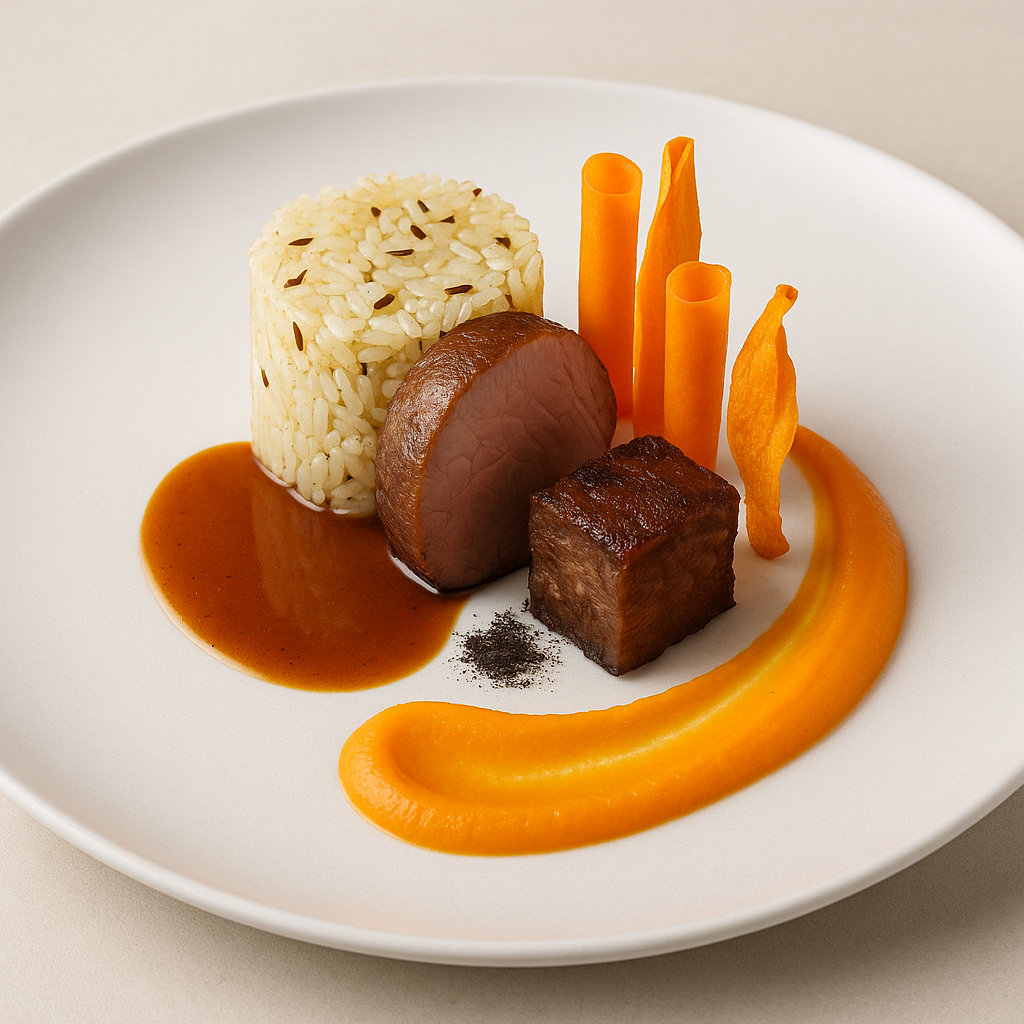
Goulash is the national dish of Hungary and one of the most historically significant stews in European cuisine. Its origins date back to medieval Hungary, where cattle herders known as gulyás prepared hearty meat stews over open fires while tending livestock on the plains. The word goulash itself comes from gulyás, meaning “herdsman.”
Early versions of goulash were made with dried meat and onions, designed to be portable and long-lasting. Paprika, now the defining ingredient of goulash, was introduced much later, after chili peppers arrived in Hungary via Ottoman and Balkan trade routes in the 16th and 17th centuries. Once paprika became widely cultivated in Hungary, it transformed goulash into the rich, red, aromatic dish known today.
Unlike many thick stews, traditional Hungarian goulash is closer to a soup-stew hybrid, with a flavorful broth rather than a heavy gravy. It reflects Hungarian culinary values of simplicity, balance, and bold seasoning without complexity. Over time, regional variations emerged, but paprika, onions, beef, and slow simmering remain essential.