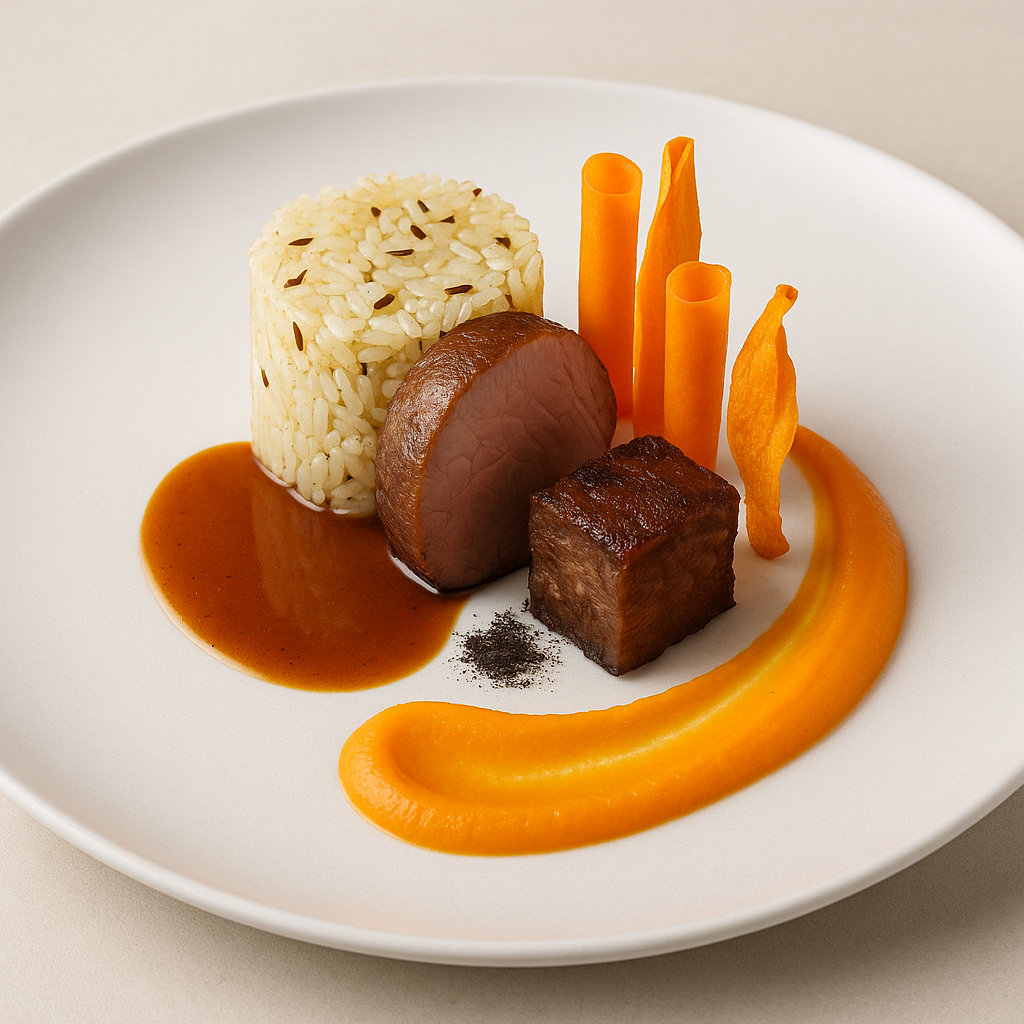
Gado Gado is a well-known dish in Indonesia. It is a one-dish meal, similar to a salad. It is prepared with fresh seasonal vegetables, eggs, tofu, and ingredients native to Indonesia
Yukon Gold potatoes (peeled and sliced 1/3 inch thick)
2 medium
carrots (sliced ¼ inch thick)
3
hardboiled eggs (peeled and halved)
2 cups
mung bean sprouts
5 oz.
Chinese spinach (leaves cut into 2 inch pieces)
7 oz.
firm tofu (cubed)
4 oz.
green beans (trimmed and cut into 2 inch pieces)
¼ head
green cabbage (cored and sliced into 1 ½ inch chinks)
1
cucumber (sliced ¼ inch thick)
15
Indonesian shrimp crackers (fried)
1 ½ tsp.
Indonesian shrimp paste
¾ cup
unsweetened coconut milk
1 ½ cup
roasted, unsalted peanuts
1 tbsp.
rice vinegar
¼ cup
dark brown sugar
2
cloves garlic (peeled)
1
chili pepper (chopped)
½ cup
water
Kosher salt
Peanut oil
Directions
Gado Gado is a well-known dish in Indonesia. It is a one-dish meal, similar to a salad. It is prepared with fresh seasonal vegetables, eggs, tofu, and ingredients native to Indonesia. It is usually paired with a special peanut sauce. Gado Gado means “mix” or “medley” in Indonesian.
Directions: Preparing Gado Gado
Toast the peanuts in a nonstick skillet for about 9 minutes (0:09), then cool.
Place the peanuts in a food processor and pulse until fine.
Place the shrimp paste in a flat foil packet and toast in a hot skillet for 4 minutes (0:04), then cool.
Add the shrimp paste, brown sugar, chili peppers, and garlic cloves to the food processor and puree.
Transfer the puree to a hot skillet and stir in the coconut milk.
Cook the sauce for about 6 minutes (0:06), stirring frequently until the mixture starts to separate.
Add the rice vinegar, water, and salt.
Simmer for 3 minutes (0:03) until the sauce thickens, then turn off the heat and set the sauce aside.
Deep fry the potatoes in peanut oil until golden brown, then drain and set aside.
Fry the tofu cubes until puffed and brown, then set aside.
Bring a pot of salted water to a boil and cook the spinach, beans, sprouts, carrots, and cabbage in batches until tender.
After cooking the vegetables, transfer them to a dish of ice water, then drain, dry them with paper towels, and set them on the serving platter.
Arrange the potatoes, cucumber, and tofu cubes onto the platter.
Add the eggs and shrimp crackers.
Toss with the peanut sauce and serve.
Ingredient Substitutions & Notes
Ingredient
Substitution
Flavor/Texture/Measurement Difference
Firm tofu
Tempeh or paneer
Tempeh adds nuttiness; paneer gives a creamier texture.
Indonesian shrimp paste
Fish sauce or miso paste
Fish sauce adds umami; miso gives a vegetarian option and earthy sweetness.
Indonesian shrimp crackers
Rice crackers
Similar crunch, but the shrimp flavor is absent.
Chinese spinach
Kale or baby spinach
Kale is heartier and slightly bitter; baby spinach is milder and softer.
Dark brown sugar
Palm sugar or coconut sugar
Palm sugar adds caramel depth; coconut sugar is milder.
Peanut oil
Vegetable or sunflower oil
Neutral frying oil; flavor is slightly less nutty.
Flavor & Texture Notes
Peanut Sauce: Rich, nutty, creamy, with sweet, spicy, and umami notes.
Vegetables: Crisp-tender and fresh; ice bath keeps color and crunch.
Tofu & Potatoes: Soft interior, golden-brown exterior for textural contrast.
Overall Dish: Harmonious mix of crunchy, soft, fresh, and savory-sweet elements, making Gado Gado a truly satisfying one-dish meal.
Dish Origin & History
Gado Gado, which means “mix” or “medley” in Indonesian, is a classic Indonesian salad-like dish featuring a variety of fresh vegetables, boiled eggs, tofu, and sometimes tempeh, all tossed in a rich peanut sauce. Originating from Java, it reflects the Indonesian love for balanced flavors and textures—creamy, crunchy, savory, and slightly sweet—all in one dish. Traditionally, it is a one-dish meal suitable for lunch or dinner.
Nutritional Facts
Per Serving (Approximate values)
% Daily Value
Calories serving
653 (kcal)
Total Fat
60g
Saturated Fat
14g
Unsaturated Fat
18g
Trans Fat
27g
Cholesterol
143g
Sodium
410g
Total Carbohydrate
18g
Dietary Fiber
4g
Sugars
5mg
Protein
11g
Values are based on standard ingredients and may vary