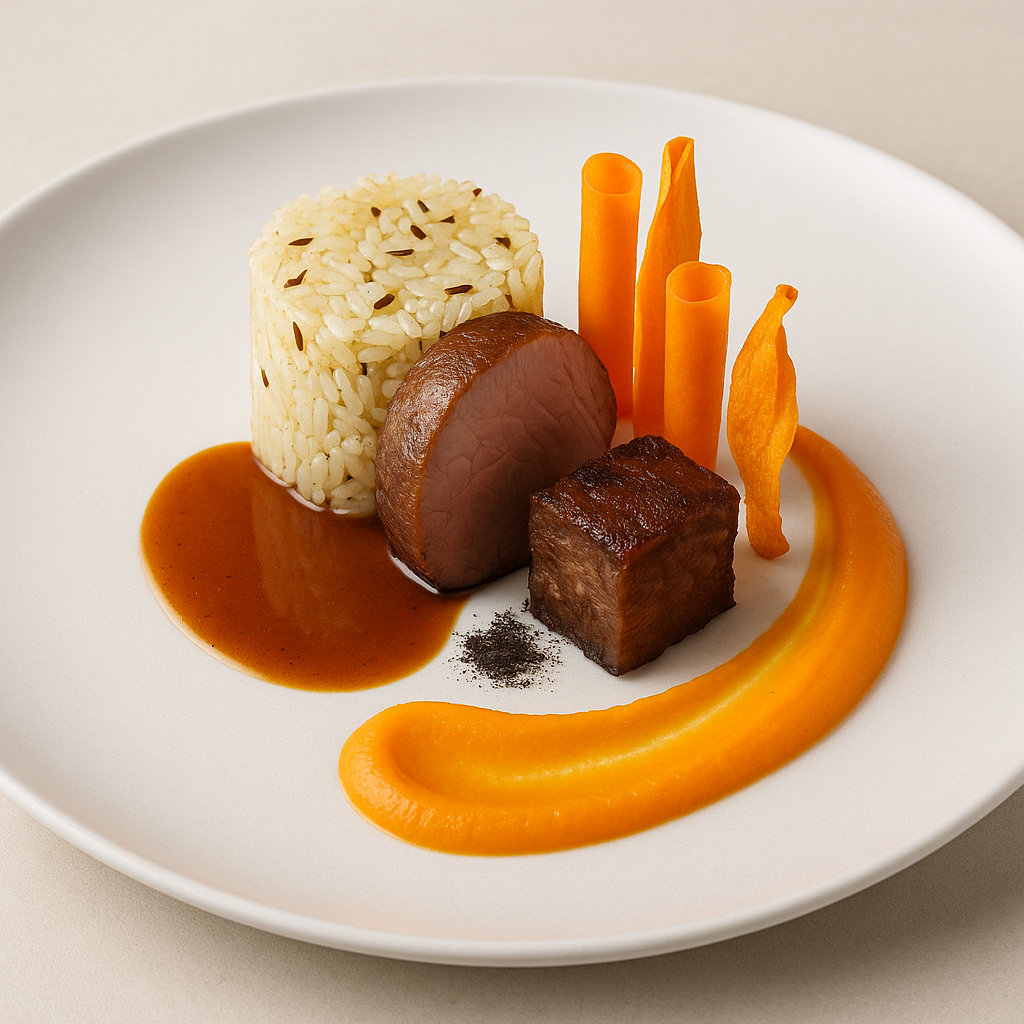
Machboos is the national dish of Kuwait and one of the most important rice-based dishes in Gulf cuisine. It originated among Bedouin communities, whose nomadic lifestyle favored one-pot meals made with rice, meat, and aromatic spices that could be cooked slowly and shared communally.
The dish reflects centuries of trade across the Arabian Peninsula. Spices such as saffron, cloves, cinnamon, and black pepper arrived through ancient trade routes linking Arabia with India, Persia, and East Africa. These spices became central to Machboos, giving it its distinctive aroma and depth of flavor.
Lamb is traditionally the preferred meat, though chicken or fish versions also exist. The cooking process, where meat is first boiled to create a rich stock and then combined with rice, ensures both efficiency and flavor, a hallmark of Bedouin cooking traditions.
Machboos is commonly prepared for family gatherings, religious holidays, and special occasions in Kuwait. Served with spiced rice and tender meat, it represents hospitality, generosity, and the blending of desert traditions with global culinary influences that define Kuwaiti food culture.