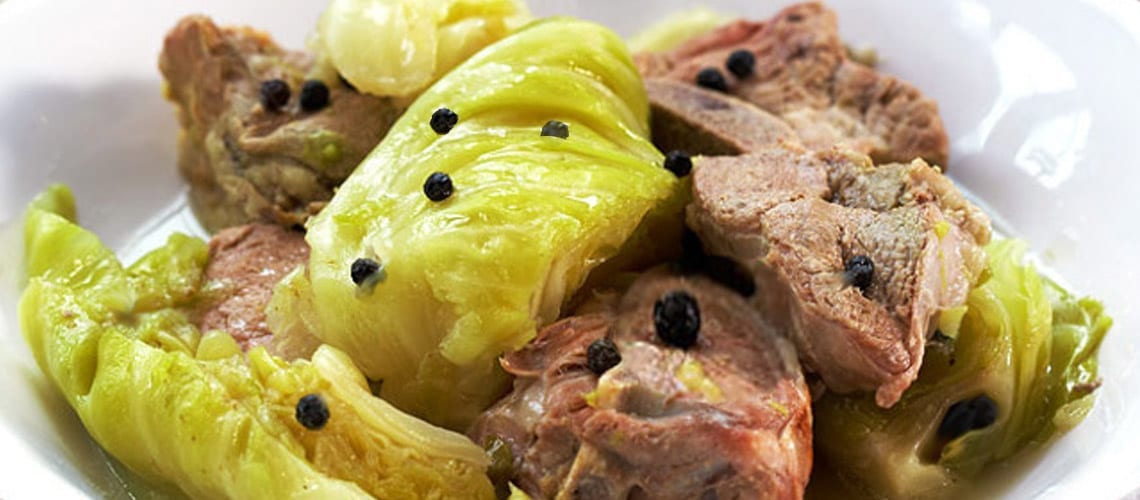
Fårikål is the national dish of Norway and is considered one of the purest expressions of traditional Norwegian home cooking. The name Fårikål literally translates to “sheep in cabbage,” reflecting the dish’s simplicity and reliance on a small number of core ingredients. Its origins trace back to western Norway, where sheep farming has long been a central part of rural life.
The dish became popular due to its practicality. Lamb and cabbage were widely available in autumn, and slow simmering allowed tougher cuts of meat to become tender while developing deep, savory flavor. Whole black peppercorns provide the primary seasoning, giving Fårikål its distinctive aroma and mild spice without overpowering the natural taste of the meat.
Fårikål is traditionally eaten in late September, often on September 26th or the last Thursday of September, marking the beginning of the lamb-slaughter season. It is commonly served with boiled potatoes, flatbread, and cowberry sauce, which balance the rich, umami-forward broth.
Today, Fårikål is celebrated across Norway as a symbol of comfort, heritage, and seasonal eating, representing the country’s culinary philosophy of simplicity, sustainability, and respect for local ingredients.